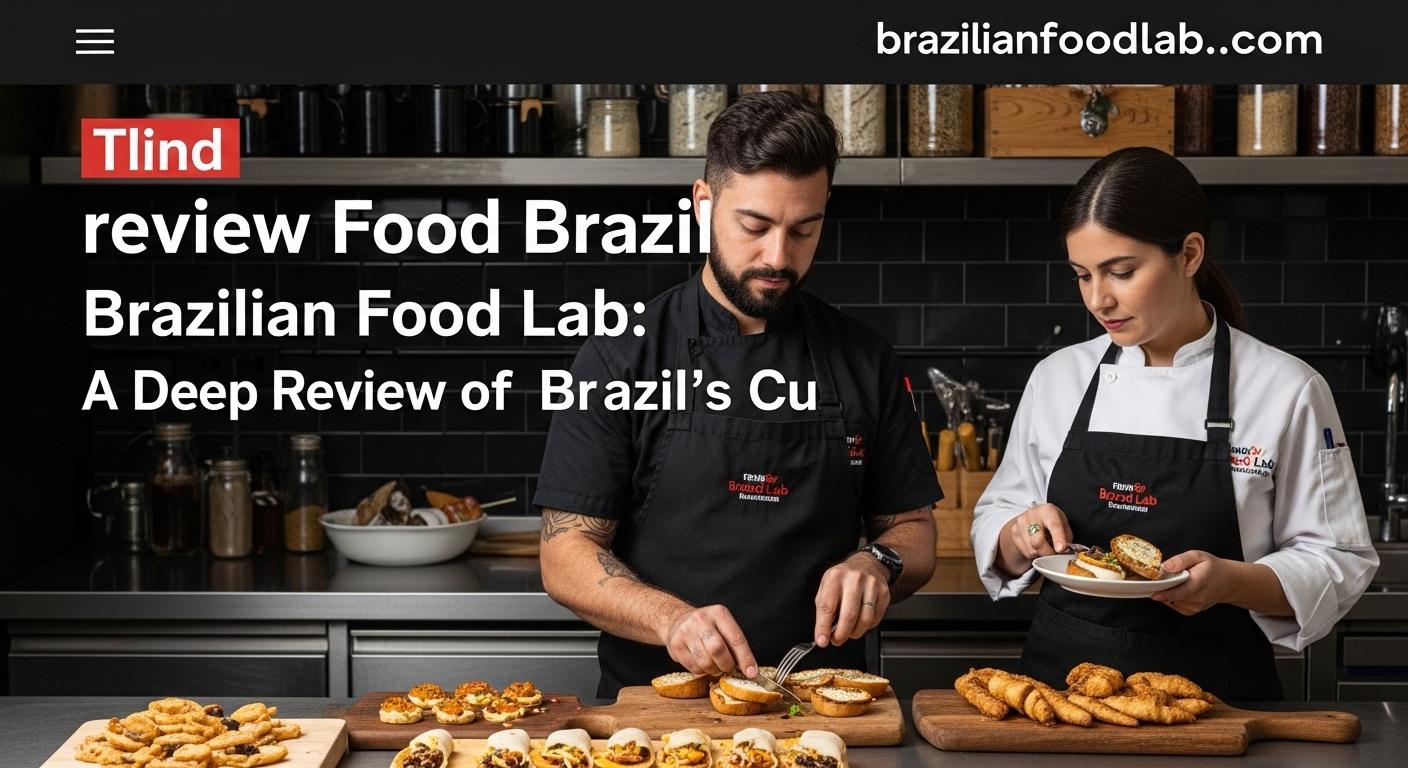
Brazilian kitchen lab with fresh ingredients and tasting dishes
Updated: April 9, 2026
The Brazilian food scene, rooted in regional staples and street-food vitality, is increasingly shaped by a global culture of online feedback. In this context, the phrase “review Food Brazil” surfaces as a shorthand for authenticity, value, and reliability—both in bustling capitals and quiet towns. This piece offers a practical, data-informed view: how reviews influence choices for diners, sway menus for restaurateurs, and alert policymakers to emerging pressures within Brazil’s diverse culinary ecosystem. The goal is not merely to summarize opinions, but to map causal links between feedback, pricing, quality signals, and long-run outcomes for Brazilian cuisine.
Context and Signals in the Brazilian Dining Scene
Brazilian dining exists at the intersection of tradition and modernization. In cities like São Paulo, Rio de Janeiro, and Belo Horizonte, countless small kitchens, mercado stalls, and family-run eateries contribute to a mosaic of flavors—from feijoada and farofa to moqueca and tacacá. As digital platforms become the primary playground for diners, reviews serve as public signals of what to expect, how to value a dish, and whether a venue can sustain quality across a full menu. The effect is twofold: first, a democratization of reputation where a single influential post or a handful of ratings can tilt customer traffic; second, a compression of time where long-standing reputations must continually prove relevance through consistent quality. For many Brazilian eateries, the review becomes a practical scoreboard—guiding investment in staff training, ingredient sourcing, and kitchen equipment while shaping the pace at which menus evolve to meet customer expectations.
Locally, reviews interact with everyday realities: fluctuating supply chains, seasonal produce, and regional tastes. Açaí harvests, cassava availability, and regional fish stocks all influence menu decisions and price points. In this setting, a well-placed review that highlights freshness or hospitality can translate into sustained footfall, even when macroeconomic factors tighten consumer wallets. Conversely, misleading or sensational posts can distort perception, prompting operators to recalibrate portions, diversify offerings, or reframe marketing narratives. The result is a dynamic where the credibility of online feedback must be measured against on-site experience, kitchen discipline, and the ability of a kitchen to translate feedback into tangible quality improvements.
Consumer Behavior and the Power of Reviews
Consumer behavior in Brazil’s dining market is increasingly data-driven, albeit uneven. Regular patrons may rely on a mix of personal recommendations, app ratings, and visible signifiers like awards or certification logos. New diners, especially younger generations, often triangulate between price, convenience, and perceived authenticity. The pattern is not merely about star counts; it concerns the narrative surrounding a dish, the timeliness of updates to the menu, and the responsiveness of the restaurant to feedback. The public conversation around Brazilian cuisine has grown sophisticated enough to reward thoughtful menu engineering—where a kitchen shifts from offering only familiar staples to including regional specialties that showcase terroir, climate, and craft. In this milieu, the impact of the phrase “review Food Brazil” extends beyond a single rating; it signals cultural legitimacy and a restaurant’s willingness to engage with evolving consumer expectations, including the sustainability of sourcing and the inclusivity of dining formats for different communities.
From the diner’s perspective, reviews function as a comparative tool across a crowded landscape. Lightweight posts about ambiance can complement heavier critiques focusing on technique, balance, and consistency. For operators, the challenge is to translate attention into repeat visits and legitimate brand value while avoiding the trap of chasing trends at the expense of core identity. The most successful venues tend to treat feedback as a live data stream: they track recurring comments about service timing, texture, and seasoning, and they adjust procurement, staff training, and kitchen workflows accordingly. In practice, this means a sharper focus on supplier reliability, inventory planning, and culinary iteration—whether refining a feijoada recipe for broader appeal or highlighting a lesser-known regional dish to differentiate from mass-market offerings.
Operational Realities Behind the Scenes
Behind every highly rated dish lies a network of decisions that rarely makes the social feed. Ingredient costs, labor availability, and regulatory compliance shape what a kitchen can deliver, day after day. In Brazil’s varied climate, farmers, fishers, and foragers grapple with weather patterns, harvest cycles, and export constraints that ripple through prices and availability. Restaurateurs who succeed in a review-driven market typically build resilience by diversifying suppliers, investing in staff training for consistent plate execution, and maintaining flexible menus that can pivot to seasonal offerings without sacrificing core identity. The operational lesson is straightforward: a restaurant cannot rely on a single star to anchor its reputation; it must demonstrate repeatability, transparency in sourcing, and a humane approach to guest experience, from the moment a guest asks about a dish’s origins to the moment they leave satisfied or with a clear expectation of return.
Additionally, the rise of delivery platforms has altered the calculus of what gets reviewed. The correlation between on-site ambiance and off-site experience has shifted; diners now rate consistency across both channels. Kitchens that standardize plating, temper flavors for transport, and provide clear allergen information tend to generate higher quality feedback, which in turn sustains business in a highly competitive market. The paradox is that while digital reviews can reward novelty, the most durable success often comes from disciplined execution—seasonal but recognizable dishes, honest explanations of provenance, and a systemized service rhythm that reduces friction for the guest at every touchpoint.
Policy, Markets, and the Future of Brazilian Cuisine
Public policy and market forces intersect with dining in ways that can either elevate or constrain the Brazilian food scene. Tourism campaigns and cultural grants that promote regional cuisines can expand demand for traditional dishes, while procurement programs that favor local producers help stabilize supply chains and preserve biodiversity. Yet, policy shifts must be accompanied by practical capacity-building at the restaurant level: training in food safety, traceability, and sustainable sourcing is essential to turning rising demand into durable quality. Climate volatility and infrastructure gaps pose ongoing risks to ingredient availability and cost control, underscoring the need for proactive risk management within kitchens and supplier networks. In the end, the evolution of Brazilian cuisine in a review-driven era will hinge on how well the sector aligns pricing, authenticity, and accessibility with the realities of Brazil’s diverse geography and its evolving consumer expectations.
As global interest in Brazilian flavors grows, the balance between storytelling and substance becomes critical. Dishes and regions that can claim credible backgrounds—backed by transparent sourcing and demonstrable technique—stand a better chance of withstanding the inevitable fluctuations of supply and attention. The future of Brazilian cuisine may well depend on how the conversation around reviews translates into practice: higher quality, more equitable sourcing, and a cuisine that remains rooted in place while engaging with a broader audience.
Actionable Takeaways
- Restaurants: treat reviews as a cycle, not a verdict. Implement a formal feedback loop with suppliers and kitchen staff to translate recurring comments into concrete menu and process adjustments.
- Restaurant operators: diversify supplier networks and invest in staff training to improve consistency across dine-in and delivery channels, reducing vulnerability to price shocks.
- Policy makers and industry bodies: promote local procurement programs, food-safety training, and transparent sourcing to deepen consumer trust and regional resilience.
- Diners: balance online feedback with on-site experience; consider the context of reviews and seek diverse voices to form a well-rounded view of a venue.
- Media and researchers: emphasize the link between reviews and real-world outcomes like pricing, menu evolution, and worker conditions to avoid one-dimensional coverage of popularity alone.